
CALL NOW & SCHEDULE TODAY
(805) 474-4747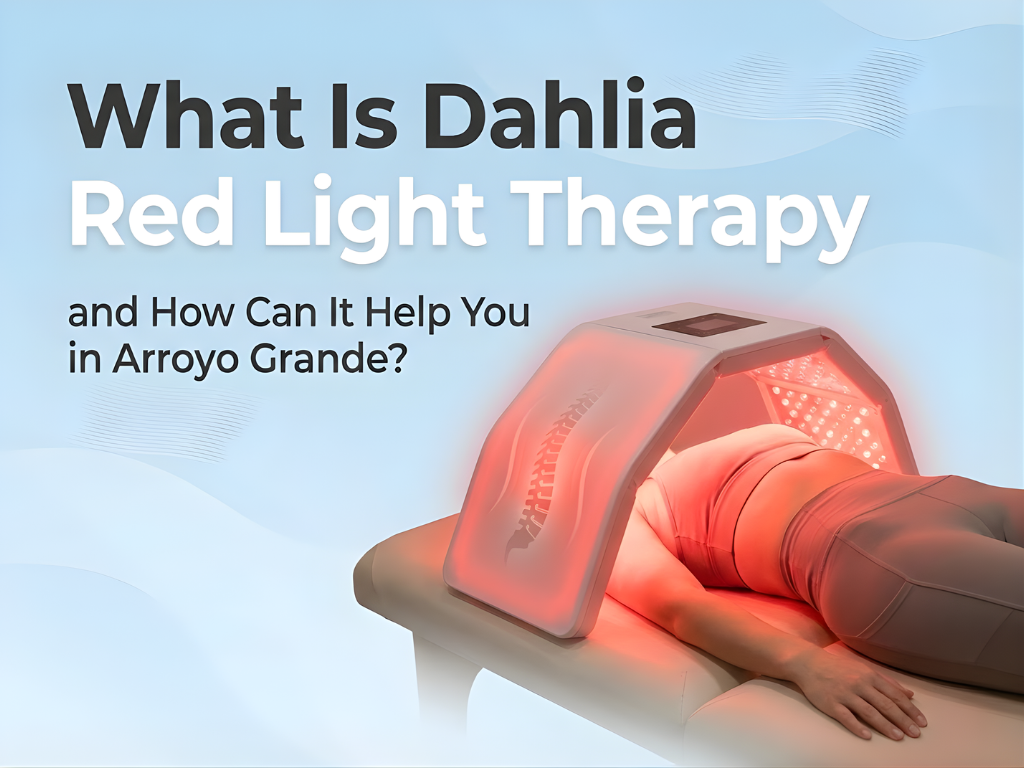
If you live in or around Arroyo Grande and have been hearing about “Dahlia Red Light Therapy,” you might be wondering what it actually is and whether it’s worth adding to your routine. In simple terms, Dahlia Red Light Therapy is a medical‑grade, full‑body light treatment that uses specific wavelengths of red and near‑infrared light to stimulate cellular repair, reduce inflammation, and support skin rejuvenation and body‑contouring goals. For people in Arroyo Grande who are looking for non‑invasive, drug‑free ways to feel better, move more comfortably, and look refreshed, Dahlia can be a practical addition to chiropractic, wellness, or aesthetic care.
This article walks through what Dahlia Red Light Therapy is, how it works on a biological level, what conditions and goals it may support, what a typical session looks like, and how residents of Arroyo Grande can realistically use it as part of their health and beauty routines.
Dahlia Red Light Therapy is delivered through a specialized bed or panel system—often called the “Dahlia Health Bed”—that emits controlled red and near‑infrared wavelengths across the entire body or targeted areas. Unlike small handheld devices or single‑panel units, the Dahlia system is designed for whole‑body coverage, which means more consistent exposure and potentially stronger results over time. The technology is built on the principles of photobiomodulation, a process where light at certain wavelengths is absorbed by cells and converted into usable energy, helping tissues repair, reduce inflammation, and function more efficiently.
Clinics that offer Dahlia often describe it as a “medical‑grade” system, meaning the light output, wavelengths, and dosing are calibrated to match research‑backed parameters rather than being purely cosmetic. Some systems also incorporate real‑time biofeedback or “personalized treatment experience” (PTX) technology, which adjusts the light dose based on how your body is responding in the moment, instead of using a one‑size‑fits‑all setting. This can be especially helpful if you are using Dahlia for pain, recovery, or body‑contouring, since your needs may shift from session to session.
At the core of Dahlia’s effect is the mitochondria, the energy‑producing structures inside your cells. When red and near‑infrared light penetrates the skin—typically to a depth of several millimeters—it is absorbed by components in the mitochondria, which then increases production of adenosine triphosphate (ATP), the primary energy currency of the cell. More ATP means cells can repair damage, regenerate tissue, and carry out their normal functions more effectively, which is why red light therapy is often linked to faster healing and reduced inflammation.
On a tissue level, this extra energy can lead to several downstream changes. Blood vessels may dilate and new capillaries can form, improving circulation and oxygen delivery to muscles, joints, and skin. Inflammation‑related signaling molecules may be down‑regulated, which can ease chronic joint or muscle pain. Fibroblasts in the skin become more active, increasing collagen and elastin production, which improves skin firmness, reduces fine lines, and helps smooth texture. Dahlia’s full‑body bed format allows these changes to occur over large areas at once, rather than just on isolated spots, which is one reason practitioners pair it with chiropractic adjustments, physical therapy, or body‑contouring protocols.
For many patients, Dahlia Red Light Therapy is attractive because it is non‑invasive, does not require downtime, and can address several concerns at once. While individual results vary, common benefits reported by clinics and patients include pain relief and reduced inflammation. People with arthritis, back pain, neck pain, or muscle soreness often report decreased discomfort and improved mobility after a series of sessions. Faster recovery and less soreness are another frequent benefit; athletes and active individuals may notice shorter recovery times after workouts or injuries, thanks to improved circulation and reduced inflammation.
Skin rejuvenation and anti‑aging effects are also a major draw. Regular use can support smoother texture, more even tone, reduced fine lines, and a healthier glow by boosting collagen and elastin and reducing redness. Body‑contouring and metabolism support are areas where Dahlia is often combined with other treatments. Some clinics pair it with protocols aimed at fat reduction, cellulite improvement, and metabolic activity, though it is not a standalone weight‑loss solution. Improved circulation and energy are additional benefits; better blood flow and cellular energy can translate into feeling less fatigued and more physically resilient over time.
Because Dahlia systems are often FDA‑cleared or built to medical‑grade standards, they are typically used in clinical settings rather than as casual spa gadgets, which adds an extra layer of oversight and safety.
If you are considering Dahlia Red Light Therapy in Arroyo Grande, it helps to know what to expect so you can decide whether it fits your lifestyle. Most clinics that offer Dahlia use a bed‑style unit where you lie down fully clothed (or in undergarments, depending on the practice’s protocol) while panels above and sometimes below emit red and near‑infrared light. Sessions are generally short, often in the 10–20 minute range, and are designed to be relaxing rather than intense.
During the treatment, you may feel a gentle warmth on your skin but no burning, cutting, or invasive procedures. Many people read, listen to music, or simply close their eyes and rest while the light does its work. Afterward, there is typically no downtime; you can drive, work, or exercise as normal. Clinicians usually recommend a series of sessions—several times per week for a few weeks—followed by maintenance visits, depending on whether your goal is pain relief, skin improvement, or body‑contouring support.
For people in Arroyo Grande, Dahlia Red Light Therapy can fit into several real‑life scenarios. Active adults and outdoor enthusiasts who hike, bike, or spend time at the beach often experience muscle soreness or joint stiffness. Dahlia may help speed recovery and reduce lingering discomfort so you can stay active without long‑term flare‑ups. People managing chronic pain or arthritis can benefit from combining Dahlia with chiropractic care or physical therapy to create a more comprehensive pain‑management plan.
Those focused on skin and appearance may appreciate how Dahlia supports collagen production and a more even, radiant complexion without needles or downtime. Between sun exposure and everyday stress, skin can lose firmness and develop uneven tone, and regular light therapy sessions can help counteract those changes. Individuals interested in body‑contouring can use Dahlia as part of a broader strategy that includes nutrition, movement, and other body‑shaping treatments. When paired thoughtfully, Dahlia can help smooth contours, reduce the appearance of cellulite, and support metabolic activity in targeted areas.
Because Dahlia is non‑invasive and generally low‑risk, it can be layered on top of other therapies rather than replacing them. For example, someone visiting a chiropractor in Arroyo Grande for lower‑back pain might add a weekly Dahlia session to reduce inflammation and improve circulation around the affected area, potentially leading to faster and more durable relief.
Red light therapy, including Dahlia systems, is generally considered safe when used appropriately in a clinical setting. Most people experience no side effects beyond mild warmth or temporary redness of the skin, which usually resolves quickly. However, there are a few important precautions. Eye protection is typically provided or recommended, even though the light is not ultraviolet, to avoid any potential retinal strain. Photosensitizing medications, such as some antibiotics or acne medications, can make the skin more sensitive to light, so it is important to disclose all medications and supplements to your provider.
If you are pregnant or have a condition that affects circulation, healing, or immune function, your clinician should review your history before starting treatment. Because Dahlia systems are often used in medical or wellness clinics rather than at home, trained staff can adjust settings, monitor your response, and answer questions about how it fits with other treatments you may be receiving.
One of the main differences between Dahlia and many consumer‑grade red light panels or handheld units is the combination of full‑body coverage, calibrated wavelengths, and often real‑time biofeedback. Typical at‑home devices may cover only small areas, require longer exposure times, or lack the same level of power and consistency. Dahlia’s bed‑style design also means you can treat large portions of the body in one session, which can be more efficient if your goals include overall recovery, circulation, or systemic inflammation reduction.
That said, home devices can still be useful for maintenance between professional sessions or for very localized issues. The key is matching the tool to your goals: Dahlia is ideal if you want a higher‑dose, full‑body, clinically supervised experience, while smaller panels may work better for occasional touch‑ups at home.
If you are in Arroyo Grande and want to explore Dahlia Red Light Therapy, here are a few practical steps. First, find a reputable clinic that clearly describes its use of Dahlia or similar medical‑grade systems, rather than generic “red light” beds. Look for chiropractic offices, medical‑spa hybrid clinics, or wellness centers that integrate light therapy into broader treatment plans. Next, ask about protocols—how many sessions they recommend for your specific concern (pain, recovery, skin, body‑contouring) and how those sessions are spaced. This helps you understand the time and financial commitment upfront.
Combining Dahlia with other care can amplify results. Consider pairing it with chiropractic adjustments, physical therapy, massage, or a structured fitness and nutrition plan to maximize benefits. Finally, track how you feel. Keep a simple log of pain levels, sleep quality, energy, or skin changes over several weeks so you and your provider can see whether the treatment is moving the needle for you. Many clinics offer introductory or discounted trial sessions, which can help you decide whether Dahlia fits your comfort level and schedule before committing to a full package.
Dahlia Red Light Therapy is a medical‑grade, full‑body light treatment that uses red and near‑infrared wavelengths to support cellular repair, reduce inflammation, and enhance skin and body health. For residents of Arroyo Grande, it can be a practical, non‑invasive option to complement chiropractic care, manage pain and stiffness, speed recovery from activity, and support skin rejuvenation or body‑contouring goals. While it is not a magic cure‑all, when used consistently and under professional guidance, Dahlia can become a meaningful part of a broader wellness routine that prioritizes how you feel as much as how you look.




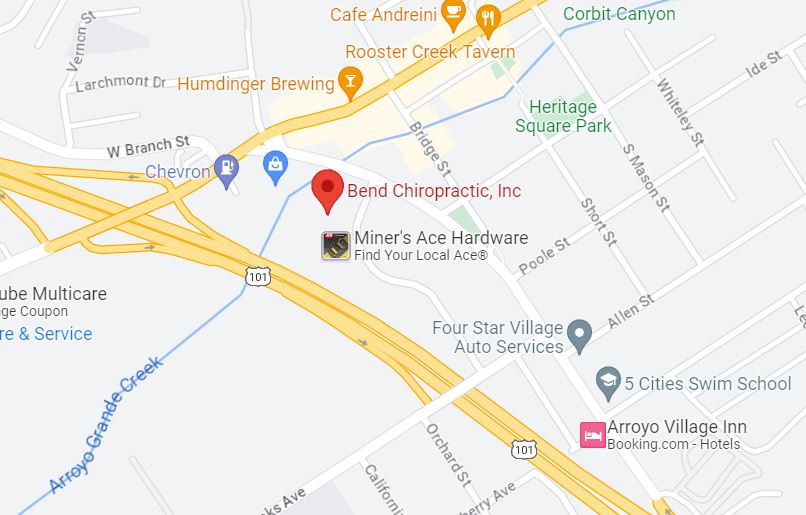 172 Station Way
  SOCIAL


