
CALL NOW & SCHEDULE TODAY
(805) 474-4747
If you've ever felt a sharp, burning sensation shoot from your lower back down through your leg, you already know how disruptive sciatica can be. It doesn't just hurt — it gets in the way of everything. Sitting at your desk becomes uncomfortable. Standing up from a chair feels like a project. Even sleeping can be a challenge when that nerve decides to flare up at 2 a.m.
The good news is that you don't have to rely on pain medication or jump straight to surgery to find relief. Chiropractic care has been helping people with sciatica for decades, and the research behind it is more solid than many people realize. At Bend Chiropractic Inc., we work with patients dealing with sciatic nerve pain every week, and we've seen firsthand how the right chiropractic approach can make a real difference in someone's quality of life.
Before we get into the four techniques, it helps to understand what you're actually dealing with.
Sciatica isn't a diagnosis on its own — it's a symptom. It describes pain that travels along the path of the sciatic nerve, which runs from your lower spine through your hips, glutes, and down each leg. The nerve itself is the longest and thickest in the human body, which is part of why irritation along any point of it can cause such widespread discomfort.
The most common causes of sciatic nerve irritation include a herniated or bulging disc in the lumbar spine, bone spurs, spinal stenosis, or piriformis syndrome — where the piriformis muscle in the buttock compresses the nerve. In some cases, pregnancy or prolonged sitting can also contribute to sciatica symptoms. The underlying cause matters a lot, because it shapes which treatment approach will work best for you.
Symptoms typically show up on one side of the body and can range from a dull ache to a burning or electric-shock sensation. Some people experience numbness or tingling in the leg or foot, while others feel weakness in the affected limb. The pain often worsens when sitting for long periods, sneezing, or coughing.
One of the core ideas behind chiropractic care is that spinal misalignments — called subluxations — can put pressure on the nerves that branch out from your spinal cord. When that pressure involves the sciatic nerve, the result is exactly the kind of radiating leg pain that sciatica patients describe.
Chiropractors address sciatica by targeting the source of the nerve irritation rather than masking the symptom with medication. This is a meaningful distinction. Pain relievers and anti-inflammatories can take the edge off, but they don't correct the mechanical issue that's causing the nerve to be compressed or irritated in the first place.
The research backs this up. A prospective randomized clinical study found that 60% of sciatica patients who hadn't responded to other medical treatments benefited from spinal manipulation to the same extent as those who underwent surgery. A separate study published in the spine literature found that 55% of patients receiving chiropractic spinal manipulative therapy reported no further sciatica symptoms after treatment, compared to just 20% in a control group. These aren't small numbers, and they suggest that chiropractic care deserves serious consideration as a first-line approach before more invasive options are explored.
With that foundation in place, here are the four main chiropractic techniques used to treat sciatica.
Spinal manipulation is the cornerstone of chiropractic care, and it's typically the first and most important tool a chiropractor uses when treating sciatica. The adjustment involves applying controlled, precise force to specific vertebrae in the lumbar spine to restore proper alignment and reduce nerve pressure.
When vertebrae in your lower back are misaligned or not moving correctly, they can directly compress or irritate the sciatic nerve roots. A targeted spinal adjustment corrects that misalignment, which takes pressure off the nerve and allows it to function normally again. The result isn't just pain reduction — it's an improvement in the underlying mechanics that caused the pain.
The technique itself varies depending on the patient and the specific cause of their sciatica. For some, a high-velocity, low-amplitude thrust to the lumbar vertebrae is appropriate. For others — especially those with osteoporosis, advanced disc degeneration, or other complicating factors — a gentler, low-force approach is used instead. A thorough examination before treatment is what allows a chiropractor to make that call correctly.
Active spinal manipulation has been shown to produce significantly better pain relief for acute back pain and sciatica with disc protrusion compared to simulated or sham manipulation. That's an important distinction — it's not just a placebo effect. There's a real mechanical benefit happening when the adjustment is performed correctly.
At Bend Chiropractic Inc., every spinal adjustment is preceded by a detailed assessment of your spine, your symptoms, and your medical history. The goal isn't to crack your back and send you on your way — it's to make a precise correction that moves you toward lasting relief.
Flexion-distraction is a specialized chiropractic technique that works particularly well for sciatica caused by a herniated or bulging disc. It's a gentler approach than traditional high-velocity manipulation, which makes it a go-to option for patients who are in significant acute pain or who aren't candidates for more forceful adjustments.
The technique involves a specially designed table that allows the chiropractor to gently flex and distract — meaning stretch — the lumbar spine in a slow, rhythmic motion. As the table moves, the chiropractor applies a light pumping pressure to the affected spinal segment. This motion does two important things: it creates negative pressure inside the spinal disc (which can help a herniated disc retract away from the nerve) and it increases the space between the vertebrae, reducing compression on the nerve roots.
Think of a disc as a gel-filled cushion between your vertebrae. When that cushion gets pushed out of place and presses against the sciatic nerve, it triggers the shooting pain you feel in your leg. Flexion-distraction gently encourages that disc material to move back toward its proper position, relieving the pressure on the nerve.
Clinical data supports flexion-distraction as particularly effective for discogenic sciatica — the kind caused by a herniated or bulging disc at L4-L5 or L5-S1, which are the most common levels involved in sciatica. Patients often notice a reduction in leg pain fairly quickly with this technique, even if the lower back itself takes a bit longer to improve.
This approach is also well-tolerated by older patients, those who are post-surgical, and anyone whose pain is too severe to handle more aggressive manual therapy. It's a good example of how chiropractic care isn't one-size-fits-all — the technique gets matched to the patient and the condition.
Not all sciatica originates from the spine. In a condition called piriformis syndrome, the piriformis muscle — a small muscle located deep in the buttock — becomes tight or spasms and directly compresses the sciatic nerve as it passes through or beneath the muscle. This type of sciatica can mimic disc-related sciatica closely, which is why an accurate diagnosis matters so much.
Trigger point therapy addresses the muscular component of sciatica by identifying and releasing hyperirritable spots within tight muscle tissue. These trigger points are essentially knots of contracted muscle fibers that refer pain to other areas of the body. When a trigger point develops in the piriformis, glutes, or lower back muscles, it can create or worsen sciatic nerve irritation.
During treatment, the chiropractor applies firm, sustained pressure directly to the trigger point. This pressure — held for several seconds — interrupts the pain-spasm cycle in the muscle and encourages the fibers to release and relax. It can be a bit uncomfortable in the moment, similar to a deep tissue massage, but most patients feel significant relief afterward.
Trigger point therapy is often used alongside spinal adjustments rather than as a standalone treatment. Releasing the muscular tension that's contributing to nerve compression makes the spinal adjustments more effective and longer-lasting. It also addresses a layer of the problem that adjustments alone don't fully reach — the soft tissue surrounding the spine and nerve pathways.
For patients with piriformis syndrome specifically, trigger point therapy combined with targeted stretching for the hip rotators can produce dramatic improvement. The piriformis stretch, where you lie on your back and draw one knee toward the opposite shoulder, is a common recommendation chiropractors give patients to continue at home between sessions.
Spinal decompression therapy is a more advanced, technology-assisted technique that takes the principles of flexion-distraction a step further. It uses a motorized decompression table to apply precise, computer-controlled traction to the lumbar spine. The patient is secured to the table, and the machine creates a gentle pulling force that elongates the spine and reduces intradiscal pressure.
The mechanism is well-understood: by creating negative pressure within the intervertebral disc, decompression therapy promotes the retraction of herniated disc material and encourages the influx of nutrients and oxygen into the disc. Discs don't have a direct blood supply — they rely on this kind of movement and pressure change to get the nutrients they need to heal. Decompression therapy essentially accelerates that process.
This technique is most appropriate for patients with:
The sessions themselves are comfortable — most patients report feeling a gentle stretching sensation, and some actually fall asleep on the table. A typical decompression protocol involves multiple sessions over several weeks, with each session building on the last to progressively reduce disc pressure and nerve irritation.
It's worth noting that spinal decompression is not appropriate for everyone. Patients with severe osteoporosis, spinal fractures, certain types of spinal hardware from previous surgeries, or advanced spinal instability are not candidates for this technique. This is another reason why a thorough intake exam before beginning any chiropractic treatment is non-negotiable.
At Bend Chiropractic Inc., we use decompression therapy as part of a broader treatment plan — combining it with adjustments, soft tissue work, and rehabilitative exercises to address sciatica from multiple angles simultaneously.
Understanding the four techniques is useful, but it's equally important to understand that sciatica treatment isn't just about the in-office procedures. A comprehensive plan includes what happens between appointments, too.
After your initial assessment, a chiropractor will typically recommend a series of visits spaced out over several weeks. The frequency depends on the severity of your symptoms and how your body responds to treatment. Most patients notice some improvement within the first few visits, though full resolution of chronic sciatica often takes longer.
In addition to hands-on care, your chiropractor will likely recommend specific exercises and stretches you can do at home. These aren't arbitrary suggestions — they're targeted movements designed to reinforce the corrections made during your adjustment, strengthen the muscles that support your lumbar spine, and keep the piriformis and hip rotators from tightening back up. Consistency with home care is one of the most important factors in how quickly patients improve.
Lifestyle modifications often come up in these conversations as well. Prolonged sitting is one of the most consistent aggravating factors for sciatica, so guidance on workstation ergonomics, sitting posture, and how to move when getting up or bending over can make a real difference in day-to-day pain levels. Ice or heat application may also be recommended for managing flare-ups between visits.
Chiropractic care is an appropriate first response for most cases of sciatica, particularly those involving disc herniations, piriformis syndrome, sacroiliac joint dysfunction, or general lumbar misalignment. The evidence is strongest for acute and subacute cases — meaning symptoms that have been present for less than 12 weeks. That said, many patients with chronic sciatica also respond well to chiropractic treatment, particularly when they haven't tried it before.
There are situations, however, where a chiropractor will refer you to another provider. If you're experiencing loss of bladder or bowel control, progressive weakness in your legs, or severe neurological symptoms that are worsening rapidly, those are red flags that require immediate medical evaluation. These can indicate serious spinal cord involvement that needs a different level of care. A good chiropractor will recognize those signs and refer appropriately.
The goal at Bend Chiropractic Inc. is always to get you the right care — whether that means treating you ourselves, coordinating with your primary care physician, or referring you to a specialist when that's what your situation requires.
Sciatica is one of the most common and most frustrating pain conditions people deal with, but it's also one of the most treatable — especially when you address the mechanical cause rather than just the symptom. The four chiropractic techniques covered here — spinal manipulation, flexion-distraction therapy, trigger point therapy, and spinal decompression — each target a different contributing factor in sciatic nerve irritation. Used individually or in combination, they offer a non-invasive, drug-free path toward real, lasting relief.
The research supporting chiropractic care for sciatica is clear: spinal manipulation has been shown to be as effective as surgery for the majority of patients with disc-related sciatica, and chiropractic treatment consistently outperforms standard medical management in both pain reduction and functional recovery. That's a meaningful outcome for anyone who wants to get back to living their life without a constant reminder from their sciatic nerve.
If you're dealing with lower back pain, leg pain, or any of the other symptoms associated with sciatica, the team at Bend Chiropractic Inc. is ready to help. A proper evaluation is the first step — it tells us what's actually going on, which technique is most appropriate for your specific situation, and what a realistic timeline for recovery looks like. You can reach us through Bend Chiropractic Inc. to schedule your appointment and get started.




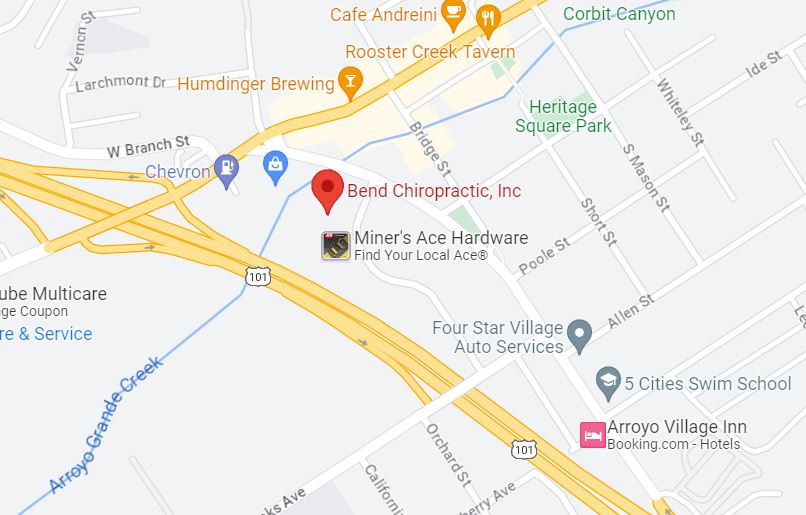 172 Station Way
  SOCIAL


