
CALL NOW & SCHEDULE TODAY
(805) 474-4747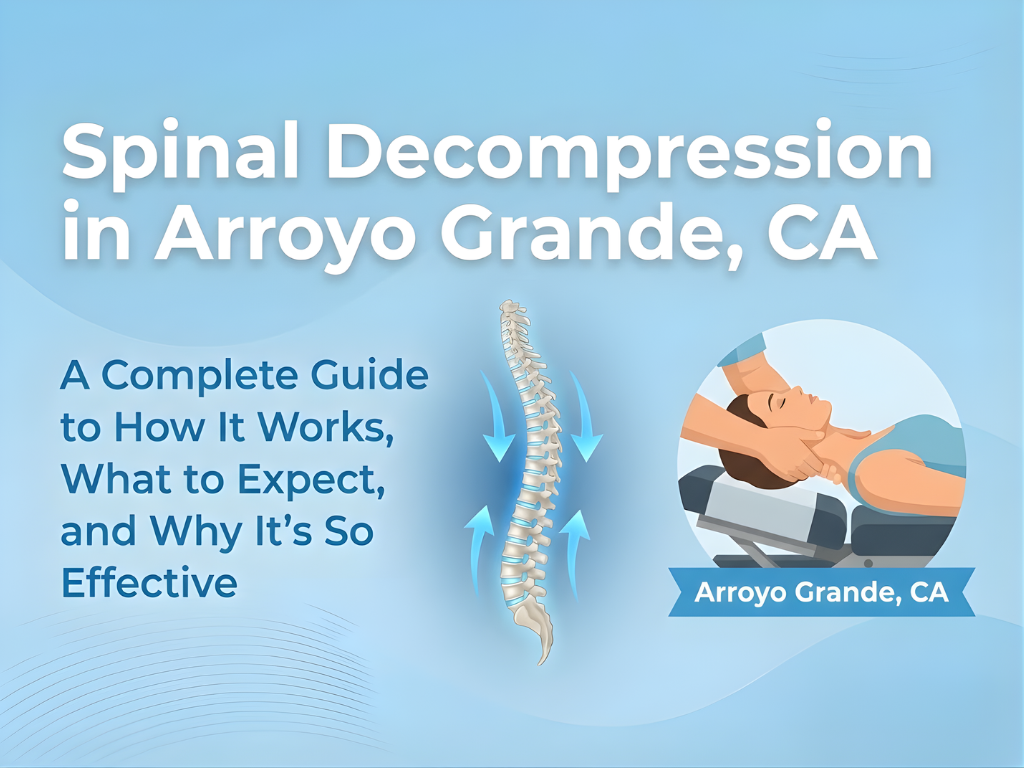
Chronic back pain, sciatica, and disc injuries are among the most common reasons people seek chiropractic care in Arroyo Grande, CA. For many residents, pain becomes a daily barrier—impacting work, fitness, sleep, and overall quality of life. While pain medications and injections may offer temporary relief, they rarely target the underlying issue. And not everyone is ready or eligible for spine surgery.
This is why non-surgical spinal decompression therapy has become one of the most requested treatments in California. It offers a gentle, evidence-supported way to relieve pressure, improve disc health, and restore mobility—without invasive procedures, downtime, or long recovery periods.
Based on research and insights from multiple chiropractic sources, this guide brings together everything local patients in Arroyo Grande, CA should know: how decompression works, what the process looks like, how long results take, and what benefits you can realistically expect.
Spinal decompression therapy is a computer-controlled traction treatment that gently stretches the spine in precise cycles. It is designed to reduce pressure on spinal discs, nerves, and joints—allowing the body to begin healing naturally.
While traditional traction pulls the spine in one continuous stretch, modern spinal decompression uses measured pull-and-release cycles. This method reduces muscle guarding and allows for deeper decompression where the discs actually need it. Chiropractors in Arroyo Grande often explain it as “creating space so the spine can function the way it’s meant to.”
During each decompression pull:
This negative pressure effect is one of the reasons spinal decompression is often recommended for:
Decompression isn’t a band-aid. It’s a mechanical way to restore disc function, reduce nerve irritation, and improve long-term mobility.
According to multiple chiropractic sources, spinal decompression is effective for many people because it targets the root cause of pain—pressure.
Many pain symptoms come from nerves being pinched by discs, joints, or inflamed tissues. Decompression reduces this pressure so the nerve can regain normal function.
Discs do not have a direct blood supply; they rely on movement and pressure changes to receive nutrients. Decompression improves fluid exchange, which supports disc repair.
When pressure decreases, circulation improves. This helps flush inflammatory chemicals that often cause persistent pain.
The gentle traction helps the spine return to a more natural position, reducing uneven stress on joints and soft tissues.
Because decompression is non-invasive, it allows your body to heal without the risks or downtime associated with surgery.
For many patients in Arroyo Grande, CA dealing with daily pain, these combined effects create a noticeable improvement in mobility and comfort.
Chiropractors often emphasize that decompression is comfortable, relaxing, and surprisingly gentle. Understanding the process helps eliminate uncertainty before your first appointment.
Before therapy begins, your chiropractor evaluates:
This evaluation ensures decompression is safe and appropriate for you.
You’ll lie on a padded table—either face up or face down—depending on your needs. A comfortable harness is placed around your pelvis or chest. It shouldn’t feel tight or restrictive.
Unlike manual traction, modern decompression machines use precise, algorithm-based pulling patterns.
A typical cycle includes:
Most people describe the sensation as:
Pain is not expected—treatment is designed to be comfortable.
After your decompression cycles, the table slowly returns to neutral, allowing your spine to re-adapt naturally. Many chiropractors follow the session with:
These additions help stabilize your progress.
Most appointments last 20–30 minutes, depending on your treatment plan.
No. Most patients find it relaxing. In fact, it’s common for people to nearly fall asleep during the session.
Afterward, you may experience:
This is simply the body responding to new movement, similar to what you feel after stretching or physical therapy.
The timeline varies depending on the severity of your condition, age, and overall spinal health. However, research-based guidance from multiple chiropractic sources outlines a consistent pattern.
Many people experience:
Early improvements are usually mild but noticeable.
This period is where most patients start experiencing more consistent relief:
Your discs are beginning to respond to repeated decompression cycles.
For chronic or severe disc conditions, this is where the most meaningful changes occur:
A typical treatment plan lasts 4–8 weeks, depending on the diagnosis.
Once you complete your full program, your chiropractor may recommend:
These help maintain the improvements you’ve achieved.
While decompression helps a wide range of issues, it is especially effective for patients with:
Chiropractors in Arroyo Grande often pair decompression with targeted chiropractic adjustments to maximize functional improvement.
You may be an ideal candidate if you experience:
People who want to avoid surgery—or who are not good candidates for surgery—often find decompression to be an excellent alternative.
A chiropractor may advise against decompression if you have:
A full evaluation determines what’s appropriate for your condition.
One of the most important advantages of non-surgical spinal decompression is that it encourages the spine to heal—not just feel better temporarily.
The negative pressure effect improves fluid exchange, supporting disc height and structure.
Less pressure means less irritation around nerves, joints, and soft tissues.
Combined with exercises, decompression helps retrain the body to move more efficiently.
By addressing underlying mechanical issues, the likelihood of recurring flare-ups decreases.
Many Arroyo Grande patients report that decompression gives them long-lasting results when combined with proper lifestyle habits and strengthening routines.
Your chiropractor may recommend several supportive habits. These aren’t required, but they accelerate healing.
These habits reduce stress on the spine and help maintain decompression benefits.
When selecting a provider, look for:
A chiropractor who understands your daily activity demands and long-term goals can help create a treatment plan that fits your lifestyle.
For many residents living near 172 Station Way, Arroyo Grande, CA 93420, spinal decompression therapy offers a powerful, non-invasive way to reduce chronic pain, restore mobility, and improve long-term spinal health. Whether you're dealing with a recent disc injury or years of recurring back pain, decompression provides a safe and effective option that aligns with your body’s natural healing process.
If you’ve been searching for a non-surgical, back or neck pain solution in Arroyo Grande, spinal decompression may be the turning point you’ve been hoping for.




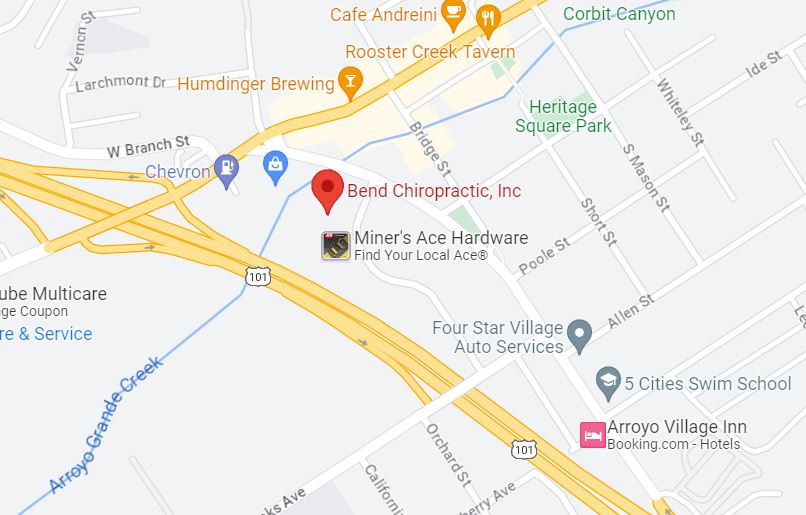 172 Station Way
  SOCIAL


