
CALL NOW & SCHEDULE TODAY
(805) 474-4747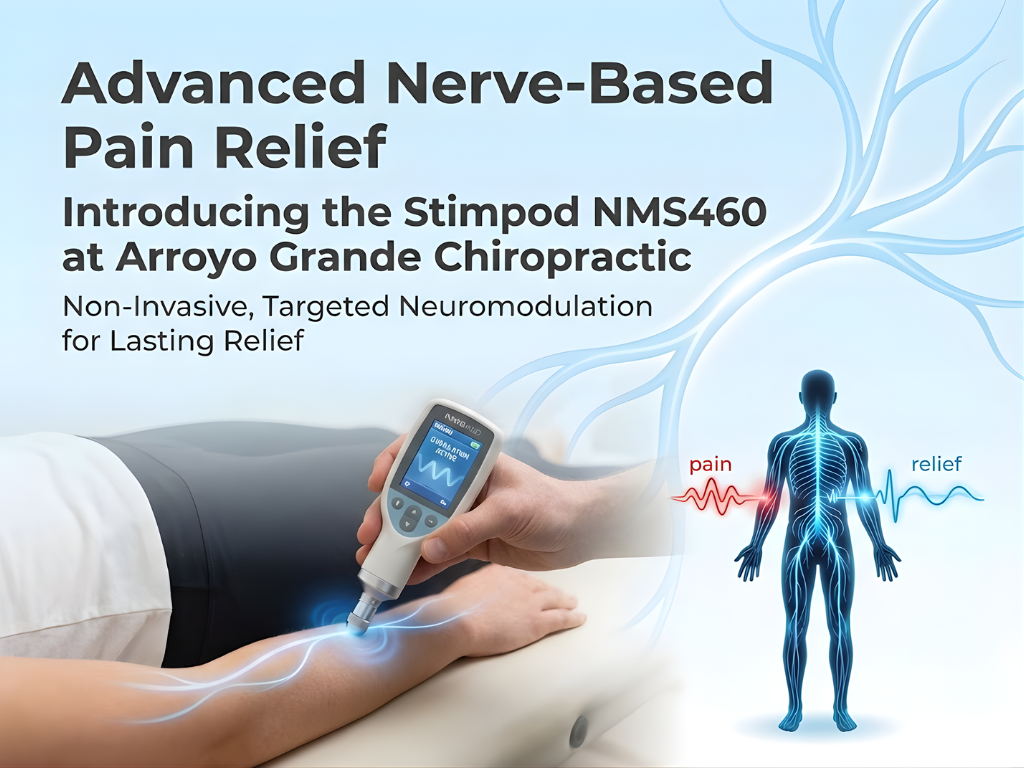
At Arroyo Grande Chiropractic, we are always looking for ways to give our patients more effective, drug‑free options for pain and nerve‑related conditions. One of the most exciting tools we now offer is the Stimpod NMS460, a non‑invasive neuromodulation device that targets the nervous system directly to reduce pain, improve nerve function, and support long‑term recovery.
This article explains how the Stimpod NMS460 works, what conditions it can help, what a typical treatment feels like, and why it fits naturally into a chiropractic‑centered care plan for residents of Arroyo Grande and the surrounding Central Coast communities.
The Stimpod NMS460 is a handheld, FDA‑cleared neuromodulation device designed to treat peripheral nerve dysfunction and neuropathic pain without surgery, injections, or medications. It uses a patented pulsed radiofrequency (PRF) waveform combined with low‑frequency electrical current to stimulate nerves through the skin, modulating how those nerves send pain signals and restoring more normal communication between the body and the brain.
Unlike older forms of electrical stimulation that mainly aim to “block” pain temporarily, the Stimpod is built to influence the cellular and metabolic activity of damaged or irritated nerves. In simple terms, it helps “reset” the nerve so it can heal more effectively, rather than just masking symptoms.
The core of the Stimpod’s technology is its pulsed radiofrequency (PRF) waveform, delivered transcutaneously through a small treatment probe placed on the skin. This waveform combines:
This electromagnetic field travels along the nerve axon toward the spinal cord, triggering a metabolic cascade inside the nerve cells. Research‑based descriptions of the device indicate that this cascade affects gene‑expression markers related to inflammation, nerve repair, and pain signaling, with measurable changes lasting up to about 14 days after a single treatment.
One of the Stimpod’s practical advantages is its nerve‑locating capability. As the clinician moves the probe over the skin, the low‑frequency current helps pinpoint the exact path of the nerve:
Once the nerve is located, the clinician adjusts the intensity so the stimulation is comfortable but noticeable, then applies the PRF waveform for about 5–10 minutes per nerve. The treatment is non‑invasive, does not generate significant heat, and does not damage tissue; instead, it gently modulates nerve activity to reduce hypersensitivity and promote healing.
The Stimpod NMS460 is especially useful for nerve‑driven pain and neuropathic conditions, many of which respond poorly to standard pain medications or manual therapy alone. Below are some of the more common conditions where this device has been used in clinical practice.
Peripheral neuropathy, including diabetic neuropathy and chemotherapy‑induced neuropathy, often causes burning, tingling, numbness, or “pins and needles” in the hands or feet. Chronic intractable pain syndromes, where pain persists for months or years despite other treatments, can also benefit from neuromodulation. Post‑traumatic or post‑surgical nerve pain, such as pain following joint replacement, fracture, or soft‑tissue surgery, is another area where the Stimpod has been applied.
By influencing the metabolic state of the nerve, the Stimpod can reduce abnormal firing patterns that contribute to burning, shooting, or electric‑like pain, often leading to decreased reliance on oral pain medications.
Carpal tunnel syndrome, where the median nerve is compressed at the wrist, causes pain, numbness, and weakness in the hand and fingers. Sciatica and lumbar radiculopathy involve irritation of the sciatic nerve or nerve roots in the lower back, leading to leg pain, tingling, or weakness. Meralgia paresthetica, a condition involving compression of the lateral femoral cutaneous nerve, produces burning pain on the outer thigh.
In these cases, the Stimpod can be applied along the course of the compressed nerve to reduce inflammation, improve blood flow, and restore more normal nerve signaling, often improving strength and sensation over time.
Chronic headaches and migraines, particularly when nerve‑driven mechanisms are involved, can respond to targeted neuromodulation. Bell’s palsy and other facial nerve dysfunction, where the facial nerve is inflamed or compressed, lead to weakness or paralysis on one side of the face. Complex regional pain syndrome (CRPS) and other chronic pain syndromes involving heightened nerve sensitivity are also potential candidates for Stimpod therapy.
Because the device can be used at or near the nerve root as well as along the peripheral nerve, it offers flexibility in how we approach these conditions within a broader chiropractic and rehabilitative plan.
Although the Stimpod is primarily a nerve‑targeted device, it can also support recovery from tennis elbow and golfer’s elbow, where repetitive strain leads to tendon and nerve irritation around the elbow. Fibromyalgia and widespread musculoskeletal pain, where abnormal nerve signaling contributes to diffuse aches and fatigue, may also benefit from neuromodulation. Trigger points and muscle tightness associated with nerve irritation can be calmed, making manual therapies, stretching, and exercise more tolerable and effective.
By calming overactive nerves and improving local blood flow, the Stimpod can reduce muscle guarding and make manual therapies, stretching, and exercise more tolerable and effective.
For most patients, a Stimpod session is non‑painful, quick, and straightforward. Here is a typical flow:
Most protocols involve a series of treatments, often between 3 and 10 sessions, depending on the severity and chronicity of the nerve issue. The cumulative effect tends to be stronger than a single session, as each treatment builds on the previous one to normalize nerve function over time.
At Arroyo Grande Chiropractic, we view the Stimpod NMS460 as one powerful tool within a broader, individualized care plan, not a standalone “magic fix.” When combined with chiropractic adjustments, soft‑tissue work, and corrective exercise, it can significantly improve outcomes for patients with nerve‑driven pain.
Spinal and extremity adjustments help restore proper joint motion and reduce mechanical stress on nerves. The Stimpod then directly modulates the irritated nerve that may be responsible for radiating pain, numbness, or weakness. This two‑pronged approach addresses both the structural (joint and soft‑tissue) and neurological (nerve‑signaling) components of many painful conditions.
After a Stimpod session, patients often report less pain and more tolerance for stretching and strengthening exercises. We may incorporate targeted exercises, posture coaching, and ergonomic advice to prevent recurrence and reinforce the gains made during treatment. By combining in‑office neuromodulation with at‑home movement strategies, we aim to create longer‑lasting improvements rather than short‑term symptom relief.
One of the most attractive features of the Stimpod is that it is non‑invasive and does not require drugs. There are no needles, no incisions, and no anesthesia involved. For patients who want to avoid opioids, steroids, or repeated injections, this can be a meaningful alternative or adjunct.
Unlike broad‑spectrum pain medications that affect the whole body, the Stimpod is highly localized. We can target specific nerves responsible for your symptoms, which may reduce side effects and increase the efficiency of treatment.
Each Stimpod session typically takes only 5–10 minutes per nerve, and most patients can return to normal daily activities immediately afterward. This makes it practical for busy adults, athletes, and older adults who need effective care without long recovery periods.
The Stimpod NMS460 is not experimental; it is a commercially available medical device used by chiropractors, physiotherapists, and other clinicians around the world. Case reports and clinical descriptions highlight its use for diabetic neuropathy, sciatica, Bell’s palsy, migraines, and other nerve‑related conditions, with many patients reporting noticeable symptom reduction after a few treatments.
If you are considering Stimpod NMS460 therapy at Arroyo Grande Chiropractic, here is a general outline of what your first visit might look like:
Throughout the process, our goal is to keep you informed, comfortable, and involved in decision‑making about your care.
The Stimpod NMS460 represents a modern, nerve‑focused approach to managing chronic pain, neuropathy, and nerve‑driven musculoskeletal conditions. At Arroyo Grande Chiropractic, we are excited to offer this technology as part of a comprehensive, drug‑free care plan that emphasizes spinal health, nerve function, and long‑term recovery.
If you live in Arroyo Grande or the surrounding Central Coast area and have been struggling with sciatica, neuropathy, carpal tunnel, headaches, or other nerve‑related pain, the Stimpod NMS460 may be a valuable addition to your treatment strategy. We encourage you to reach out to our office to discuss whether this therapy is appropriate for your specific condition and to explore how it can work alongside chiropractic adjustments, rehabilitation, and lifestyle changes to help you move and feel better.




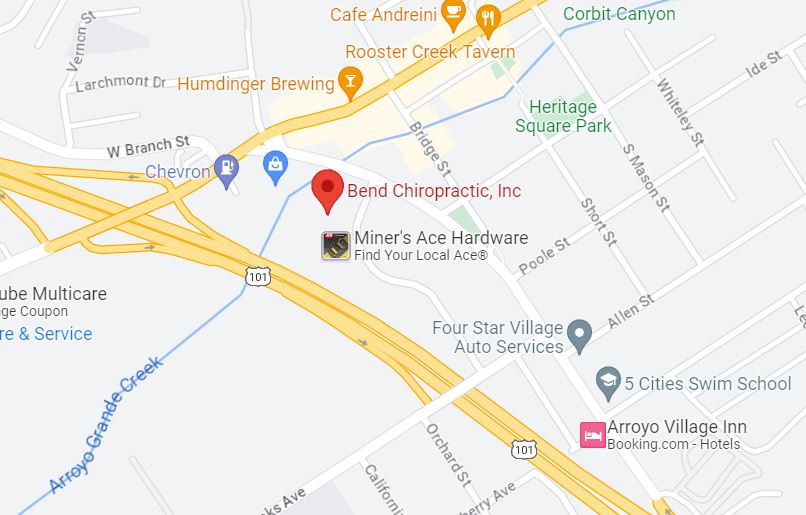 172 Station Way
  SOCIAL


